.png) Bruno Améduri (France)
Bruno Améduri (France)
After getting an Engineering School Degree in Montpellier (ENSCM) in 1984, and earning a MSc degree at Laval University (Quebec Canada) in 1986, Bruno Améduri did a 6-month internship at Almaden Research Centre (San Jose, Calif) and went back to France for his PhD. It was supported by Imperial Chemical Industries (ICI in UK) and defended his Ph D in July 1988 then entered in CNRS in October 1988.
Research Director at the Institute Charles Gerhardt, Bruno became an internationally expert on the synthesis and characterization of fluoropolymers (FPs). Co-inventor of 80 patents, he has co-authored ca. 450 peer-reviewed publications, >50 book Chapters or reviews, (co)edited 7 books.
In the last two decades, his team has made giant strides in developing FP field and applications (e.g., fuel cell membranes, high performance elastomers, gel polymer electrolytes for batteries, or electroactive FPs), collaborating with various French (Arkema, Peugeot PSA, Orano) and international companies (as 3M/Dyneon, DuPont Performance Elastomers, Daikin, Great Lakes/Chemtura, Honeywell, Pall) and many academic Labs all over the world.
Regarding Awards: 1995 he earned the Price of the Division “Polymers & Elastomers” of the French Chemical Society; 2011 specific “Prime d’Excellence Scientifique”; 2012: Award for Outstanding Contribution and Innovation in Fluoropolymer Science («Fluoropolymers 2012» Conference, USA, October, 14-17th, 2012); 2024: International Awards from the Society of Polymer Science Japan and the Asian Polymer Association.
Since June 2024, he is involved in IUPAC Committee for a definition of PFAS.
Besides Science, Bruno enjoys cycling and has some volunteered clini-clown activities to visit sick children in hospitals of Montpellier and Japan.
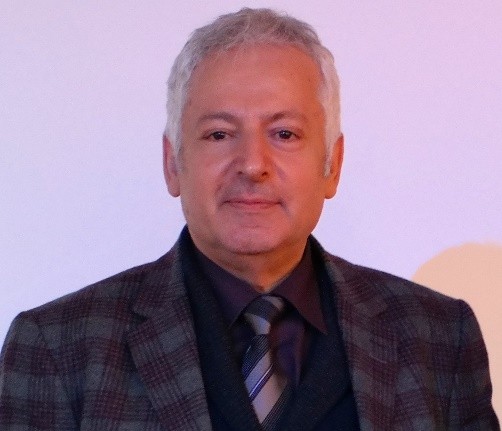 Prof. Dr. Turgay Seçkin (Türkiye)
His research focuses on colloidal nanosystems, high-performance tribological additives (lubricants and anti-wear agents), energy storage and capacitor materials, nanostructured membrane technologies, and biomedical polymer systems. His work has made significant contributions to the development of heat- and flame-resistant composites, biocompatible smart materials, and nanoparticles carrying imaging agents, representing advances in functional material design.
He received his B.Sc. in Chemistry from İnönü University and was awarded a Ministry of National Education Scholarship to pursue graduate studies in the United States. He completed his M.Sc. at the University of Southern Colorado and his Ph.D. in Polymer Chemistry at Oregon State University. Upon returning to Turkey, he earned a second Ph.D. in Physical Chemistry at İnönü University.
Appointed Associate Professor in 1996 and Full Professor in 2001, he currently serves in the Department of Chemistry at İnönü University. Prof. Seçkin has authored 112 international journal articles, two books, one book chapter, and holds four patents. He is also the author of the textbook “Polymer Chemistry.”
Prof. Seçkin has served on the TÜBİTAK-TBAG and TÜBİTAK-KBAG Executive Boards, and has successfully led numerous TÜBİTAK, DPT, and industry-supported R&D projects. He has also held several administrative positions, including Department Chair, Vice-Rector, and Farabi and Erasmus Institutional Coordinator.
Prof. Dr. Turgay Seçkin continues to contribute to innovative material design and sustainable technological development through research that bridges the fundamental and industrial aspects of polymer science.
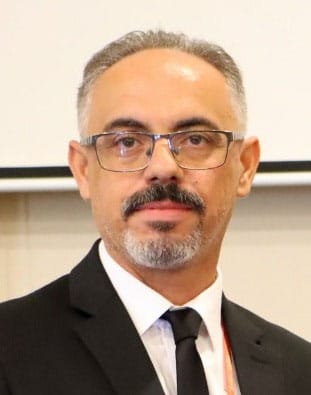 Halim HAMMI (Tunisia)
Halim HAMMI, was graduated as Engineer in Material Sciences (Ecole Nationale d’Ingenieurs de Sfax) in 1996, and Master in Inorganic Chemistry (Faculté des Sciences de Sfax) in 1998. He obtained his Phd Thesis in Chemistry (Faculté des sciences de sfax) in 2004. He has a position of teacher at institut Préparatoire aux Etudes d’ingénieurs de Nabeul in 2003. Since 2004, he joined the National Institute of Scientific and Technical Research as full time researcher. His research area concerns phase diagrams applied to high concentrated solutions like natural brines. In this field. In 2006, after the creation of the National Centre of Research in Material Sciences, he focuses his research in valorisation of Industrial effluents (phosphogypsum, Reverse Osmosis Reject Brines) and their use in manufactory of fertilizers, cements..... Halim HAMMI has actively participated in numerous national and international research projects; he published more than 45 publications in international journals. He has supervised more than 10 Phd projects and 30 master's projects. A prominent figure in the academic community, he has presented 08 conferences and keynotes at international conferences. Member at the national bureau of the Tunisian Chemical Society since 2006, he has secretary general from 2010 to 2018. In October 2017, Halim completed certified training in patent writing from the World Intellectual Property Organization (WIPO). The same year, he assumed the role of managing editor of the International Journal Chemistry Africa, co-owned by Springer and the Tunisian Chemical Society. This journal reached an impact factor of 2.6 in June 2023. In 2020, Halim took the role of head of the specialized unit in information, scientific documentation and technological monitoring (UIDSVT) at the CNRSM. Demonstrating his commitment to advancing materials science in Tunisia, he co-founded in May 2023, the Tunisian Association in Materials Sciences and their Applications (TAMSA). In 2024 and 2025 he followed a certified training in carbon footprint.
|
Polimer Geri Dönüşüm Polimer Endüstrisi |
Malzeme Bilimi Polimer Uygulama Alanları Malzeme Kimyası
|
 info.iscmp@gmail.com
 polimerkongresi
